
Shipping Estimate
USA
- USA
- CAN
- USA
- CAN
Ships within 48 hours · Estimated delivery Jul 8 - Jul 13
 Promo Codes Available:
For Your Every Summer RSVP, with Code: SUMMER15
Description
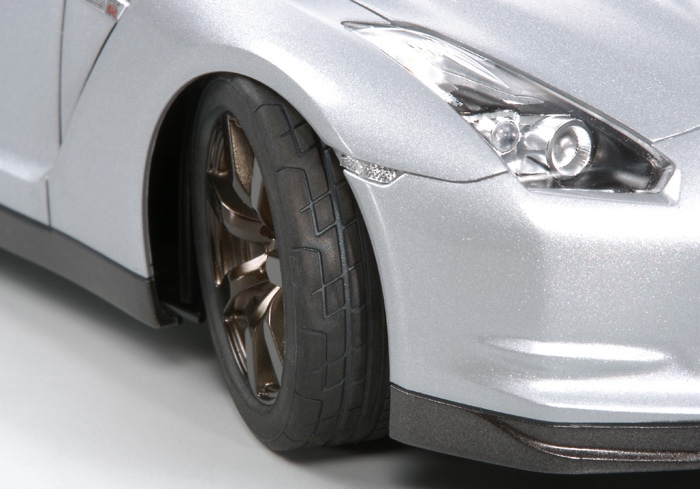
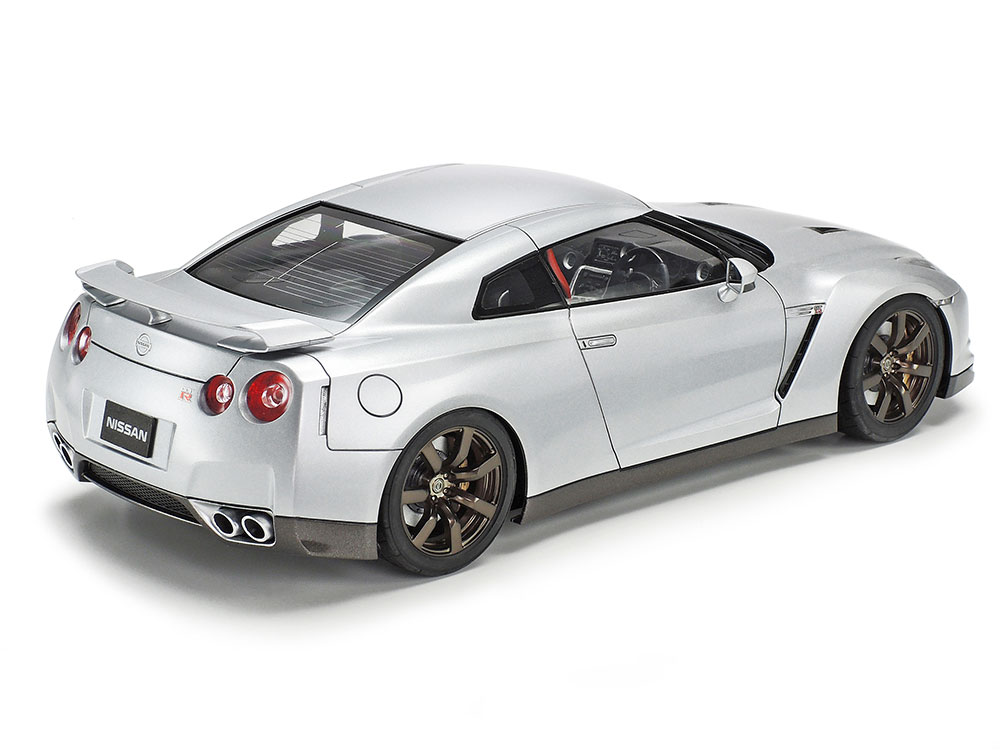
1/24 Nissan GT-RTamiya: MADE IN JAPAN Length: 197 mm. Image shows painted and assembled kit. A New Standard for Sports Cars The GT R first made its debut in December 2007 as Nissan's "Multiperformance Supercar." Featuring a 480hp 3. 8 liter twin turbo V6 engine, dual clutch transmission, and independent transaxle 4WD system, the car is able to hit 300km h top speeds and lap the vaunted Nurburgring in about 7min 30sec. This awesome performance truly makes the GT R a
Tamiya: MADE IN JAPAN
Length: 197 mm. Image shows painted and assembled kit.
【 A New Standard for Sports Cars 】 The GT-R first made its debut in December 2007 as Nissan's "Multiperformance Supercar." Featuring a 480hp 3.8 liter twin-turbo V6 engine, dual clutch transmission, and independent transaxle 4WD system, the car is able to hit 300km/h top speeds and lap the vaunted Nurburgring in about 7min 30sec. This awesome performance truly makes the GT-R a supercar that can be enjoyed by anyone, anytime, and anywhere.
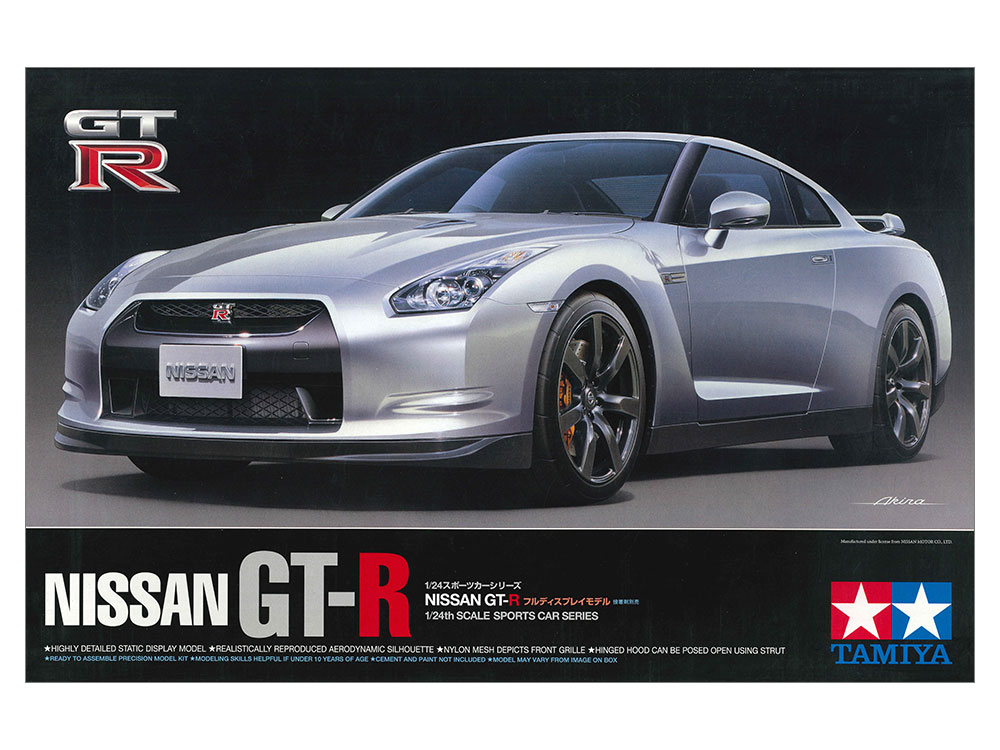
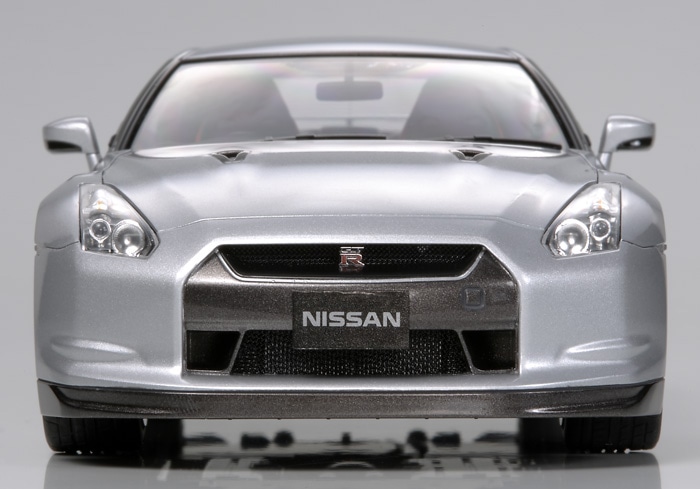
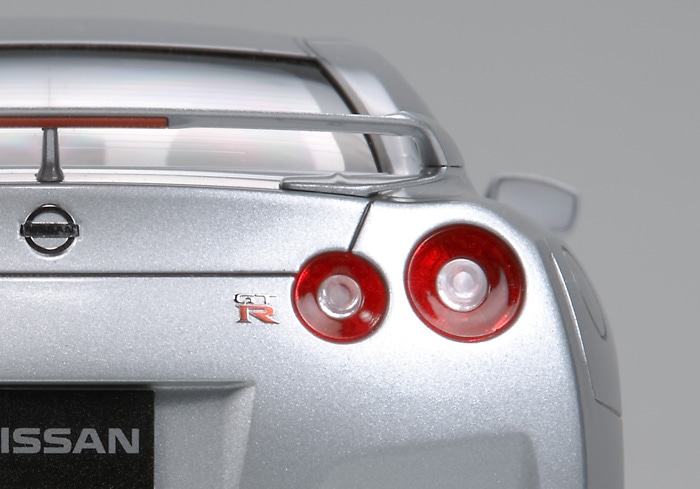
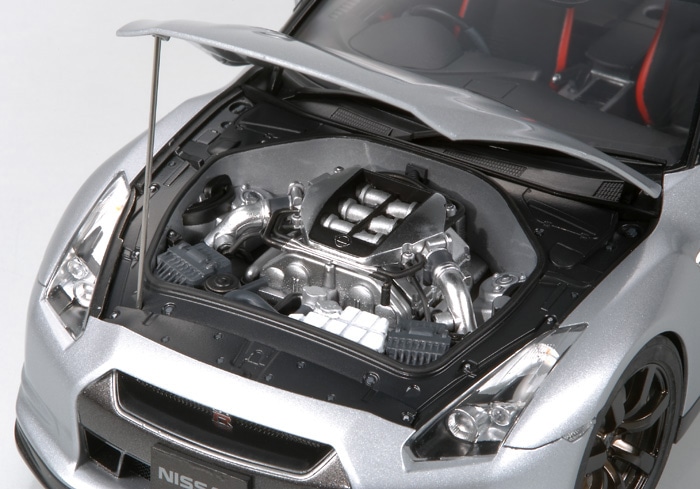
【 About the Model 】★1/24 scale high-quality assembly kit. ★Length: 197mm, Width: 82mm ★Aggressive form of the GT-R accurately captured. ★Suspension and interior components are assembled in a similar way as the actual car. ★Metal plated induction box add detail to the engine bay. ★Window masking stickers included. ★Metal transfers sharply reproduce manufacturer emblems and side mirror surfaces. ★Metal plated 2-piece wheels are just like the real thing.


~ The Legend Begins with 50 Wins ~
At the JAF Grand Prix race in May 1969, the Nissan Skyline GT-R (PCG10), which was just released in February, made its debut in race-spec trim. At the heart of the 4-door sedan was the 2000cc S20 4-valve DOHC inline-6 cylinder engine. After winning its debut race, the car went on to dominate the podium at the Japan Grand Prix race in October. One year later, in October 1970, the high-performance 2-door hardtop (KPGC10), which was both lower and had a 70mm shorter wheelbase than the 4-door sedan became the basis from which race-spec cars were built. The car quickly ran up an impressive 49 wins, and although the Mazda Savanna (RX-7) thwarted its bid for 50 wins at the Fuji TT 500 Mile Race in December 1971, the GT-R would not be denied. Win number 50 came at the opening race of the Fuji Grand Championship Series in March of the following year. Soon afterwards, with regulations regarding vehicle emissions tightening and the oil crisis, Nissan downsized their racing activities and the GT-R disappeared from the podiums.
~ Crossing Boundaries and Categories ~
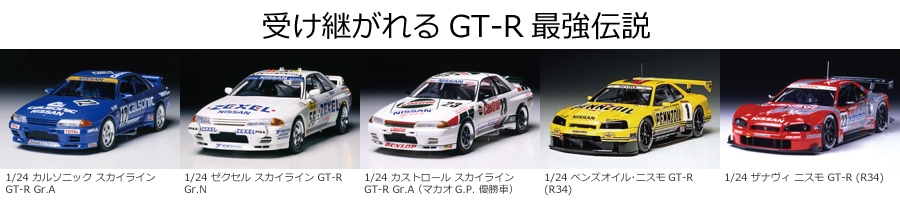
However, that was not the end of the GT-R legend. The 2nd Chapter of the story began in March 1990, at the All-Japan Touring Car Championship's opening race. The 2nd generation BNR32 was the first car in 16 years to bear the GT-R name and had debuted in May of the previous year. Featuring a 2,600cc 4-valve DOHC twin-turbo inline-6 cylinder engine and an electronic 4WD system, the car was designed to conquer the Group A class. The R32 GT-R, decked out in Calsonic colors, breezed to a pole-to-finish win, lapping all other cars and cutting 2 seconds from the course record while doing so for a dominant performance. Later that year, another GT-R with Reebok livery was entered, and together the two GT-Rs claimed pole-to-finish wins at all six races. GT-Rs continued to outclass all rivals, and by the end of the 1993 All-Japan Touring Car Championship season, the car had racked up 29 straight victories. The GT-R was also quite successful abroad, with a Castrol Skyline GT-R winning the Group A category at the Macau Grand Prix in November 1990. Other GT-Rs swept the FISA N-class podium at the Spa-Francochamps 24 Hour race in July 1990, and a Nissan works machine in Zexel colors took the first overall win for a Japanese car there the following year. The 2nd generation R32 GT-R continued to evolve, and was followed by the BCNR33 in January 1995 and the BNR34 in January 1999. Racing success also continued as the car took part in the All-Japan GT Championships from 1994. A Calsonic Skyline (R32) took the championship 2 years in a row, the Pennzoil GT-R (R33/R34) won it in 1998 and 1999, and the Xanavi NISMO GT-R won in 2003. GT-R production ended in 2004, and race teams continued on with the Fairlady Z. However, many private teams still used the GT-R in the N1 endurance race class, a class which allowed less modifications and where a street-spec car can really shine. From 1992 to 1995, the GT-R won every single race, and the streak continued to the Super Taikyu race series that began in 1998, with a final tally of an amazing 90 consecutive race wins.
~ The Beginning of a New Legend ~
Then in December 2007, a new GT-R was born after 5 years. The Skylines up to that point were all highly-tuned machines, but the new car dispensed with the Skyline name and featured custom designed chassis and engine. This 3rd generation GT-R has already stamped its authority on the race track with a 1-2 finish at the Super GT 2008 season's opening race at Suzuka and another 1-2 finish at Round 2 Okayama, ensuring that the 3rd Chapter of the GT-R's legend will begin vibrantly.
At the JAF Grand Prix race in May 1969, the Nissan Skyline GT-R (PCG10), which was just released in February, made its debut in race-spec trim. At the heart of the 4-door sedan was the 2000cc S20 4-valve DOHC inline-6 cylinder engine. After winning its debut race, the car went on to dominate the podium at the Japan Grand Prix race in October. One year later, in October 1970, the high-performance 2-door hardtop (KPGC10), which was both lower and had a 70mm shorter wheelbase than the 4-door sedan became the basis from which race-spec cars were built. The car quickly ran up an impressive 49 wins, and although the Mazda Savanna (RX-7) thwarted its bid for 50 wins at the Fuji TT 500 Mile Race in December 1971, the GT-R would not be denied. Win number 50 came at the opening race of the Fuji Grand Championship Series in March of the following year. Soon afterwards, with regulations regarding vehicle emissions tightening and the oil crisis, Nissan downsized their racing activities and the GT-R disappeared from the podiums.
~ Crossing Boundaries and Categories ~
However, that was not the end of the GT-R legend. The 2nd Chapter of the story began in March 1990, at the All-Japan Touring Car Championship's opening race. The 2nd generation BNR32 was the first car in 16 years to bear the GT-R name and had debuted in May of the previous year. Featuring a 2,600cc 4-valve DOHC twin-turbo inline-6 cylinder engine and an electronic 4WD system, the car was designed to conquer the Group A class. The R32 GT-R, decked out in Calsonic colors, breezed to a pole-to-finish win, lapping all other cars and cutting 2 seconds from the course record while doing so for a dominant performance. Later that year, another GT-R with Reebok livery was entered, and together the two GT-Rs claimed pole-to-finish wins at all six races. GT-Rs continued to outclass all rivals, and by the end of the 1993 All-Japan Touring Car Championship season, the car had racked up 29 straight victories. The GT-R was also quite successful abroad, with a Castrol Skyline GT-R winning the Group A category at the Macau Grand Prix in November 1990. Other GT-Rs swept the FISA N-class podium at the Spa-Francochamps 24 Hour race in July 1990, and a Nissan works machine in Zexel colors took the first overall win for a Japanese car there the following year. The 2nd generation R32 GT-R continued to evolve, and was followed by the BCNR33 in January 1995 and the BNR34 in January 1999. Racing success also continued as the car took part in the All-Japan GT Championships from 1994. A Calsonic Skyline (R32) took the championship 2 years in a row, the Pennzoil GT-R (R33/R34) won it in 1998 and 1999, and the Xanavi NISMO GT-R won in 2003. GT-R production ended in 2004, and race teams continued on with the Fairlady Z. However, many private teams still used the GT-R in the N1 endurance race class, a class which allowed less modifications and where a street-spec car can really shine. From 1992 to 1995, the GT-R won every single race, and the streak continued to the Super Taikyu race series that began in 1998, with a final tally of an amazing 90 consecutive race wins.
~ The Beginning of a New Legend ~
Then in December 2007, a new GT-R was born after 5 years. The Skylines up to that point were all highly-tuned machines, but the new car dispensed with the Skyline name and featured custom designed chassis and engine. This 3rd generation GT-R has already stamped its authority on the race track with a 1-2 finish at the Super GT 2008 season's opening race at Suzuka and another 1-2 finish at Round 2 Okayama, ensuring that the 3rd Chapter of the GT-R's legend will begin vibrantly.
Shipping Notes
- Free Standard Shipping on $100+ Orders to the USA.
- Except Preorder products are shipped in 48 hours.
- Delivery to the USA:
- Standard Shipping : 3-10 business days
- If time is of the essence, please consider selecting expedited delivery for faster service.
Exchange/Return Notes
- We offer a 30-day return/exchange service after receiving.
- Final sale items are not eligible for returns or exchanges.
- To process your return/exchange, please contact us at [email protected]
- Please click here for more details>>> Return & Exchange Policy
4.4 ★★★★★
Based on 2287 reviews
Sort
Product Reviews
★★★★★ 5
Vendor support is excellent
Color: 7-in-1 Black, Size: Rechargeable Set
UPDATE 2: The vendor proactively reached out to me and sent me a replacement. The replacement works well so I’ve given them 5 Stars.
UPDATE: It really doesn’t ever go in straight so every cork is at risk for breaking off. I lowered rating to two. It ultimately works about 85% of the time.
Meh. Works most of the time, but has issues. It wrecks corks much more often than the Brookstone one we had before. It seems to twist in sideways so that it runs along the glass of the bottle neck instead of straight down. This causes it to destroy the corks fairly frequently… and on occasion it destroys it so much that you can’t get the cork out at all.
Pros:
Quiet
Has the bottle sealers and suction.
Recharges on base.
Cons:
Damages corks
Sometimes destroys corks to point of not being able to extract them.
Goes in crooked.
WAS THIS REVIEW HELPFUL?YesReportShare
Reviewed in the United States on January 3, 2026
★★★★★ 5
Great for any wine drinker
Color: 7-in-1 Black, Size: Rechargeable Set
This is really neat and works well. Easy to charge, but read the directions first, and great value. If you like wine, this is a great product.
WAS THIS REVIEW HELPFUL?YesReportShare
Reviewed in the United States on May 16, 2026
★★★★★ 5
Great value and works well
Color: 7-in-1 Black, Size: Rechargeable Set
I wasn’t sure this would compare to the name brand one I’ve had for years but it finally died and I needed a replacement. The Circle Joy amazed me with how easily it removes corks, ejects the cork and vacuum seals the bottle when you’re done. Some reviews mentioned they were concerned with durability but it’s still working great and no signs of wear after two months of regular use.
WAS THIS REVIEW HELPFUL?YesReportShare
Reviewed in the United States on May 14, 2026
★★★★★ 5
Great value and does the job admirably.
Color: 7-in-1 Black, Size: Rechargeable Set
I have been using this for several months now. Still haven't needed a charge. Love the little knife to remove cover from cork. Love the decanting attachment. Removes cork easily without much noise and then spits it out. Excellent value. Highly recommend.
WAS THIS REVIEW HELPFUL?YesReportShare
Reviewed in the United States on May 17, 2026
★★★★★ 5
Game Changer for Wine Lovers
Color: 8-in-1 Silver, Size: Rechargeable
Circle Joy Electric Wine Bottle Opener and I’m honestly really impressed.
Setup was super simple, and it works exactly as advertised—just place it on the bottle, press a button, and the cork comes out smoothly in seconds. No struggling, no broken corks, and no mess. It makes opening wine feel effortless and a lot more enjoyable.
I also love the sleek design—it looks modern and feels sturdy, not cheap. If you have the set with accessories, the extras like the foil cutter and pourer are a nice bonus and actually useful.
Overall, this is a great little gadget, especially if you open wine often or just want something convenient and easy to use. Definitely a solid buy or even a nice gift idea.
WAS THIS REVIEW HELPFUL?YesReportShare
Reviewed in the United States on April 16, 2026